
Have you been watching the Walk for Peace on social media? If not you are missing out on one of the most meaningful phenomena of our time. A group of Buddhist Monks believed our country was in crisis. They wanted to spread a message of peace and hope. They decided to walk 2300 miles from Fort Worth, Texas, to Washington, D.C., in a quest to spread peace.
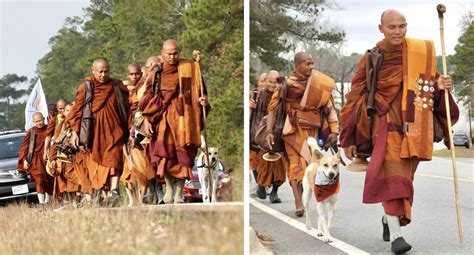
They didn’t expect people to pay much attention. At first, they didn’t. As the word spread though, more and more people wanted to see. The roadsides were lined with people. The single file of silent monks in their traditional orange robes was unusual. It was quite inspiring for most people. Since monks have taken a vow of poverty, people gave them flowers as a gesture of thanks. These flowers were blessed and passed on to other viewers.
The procession of monks stopped twice a day, once for a lunch break and once for overnight. Monks eat only once a day and they eat only what is given to them. They can’t ask for food and if no one gives them food, they don’t eat. They sleep on pads on the floor instead of beds as this is part of their discipline. During breaks, they welcomed people to visit them. Often, the lead monk would speak about kindness, compassion, and love.
Not all went well on the walk, near the beginning two monks were struck by a car and injured. One monk was injured so seriously that he lost a leg. They also had a sweet dog that they had adopted in India when he followed them on a walk there. People were very taken by Aloka, the Peace Dog. So much walking caused an old injury to flare up. The dog had to have surgery and could no longer walk but rode in the support vehicle.
Due to the danger of walking on highways, law enforcement began to accompany them. For each county or city there were different officers as jurisdictions changed. The law enforcement officers were very respectful of the monks, and received thanks and their blessing for their help.
The monks faced adversity but did not quit. Instead, they continued their journey. They walked approximately 20 miles per day. Slowly but surely, step by step, they moved towards their goal. As they walked and word spread, more and more people came to see. They lined the roadsides, many folding hands or kneeling as a sign of respect. If the procession happened to pass a person in a wheelchair, they would stop to bless them. Many people wept. Sometimes the mere site of these holy men on a mission of peace was enough to bring tears. When they reached a city, the crowds were huge. Hundreds of people came to see. They were inspired by their demeanor and mission for peace.
People who were not capable of seeing them in person watched on social media. Thousands walked along virtually and followed their walk. The monks were walking only for peace. It was not for protest, political or religious reasons. They did not want to recruit others to Buddhism, only to promote peace. They do not consider Buddhism a religion, but a way of life and discipline. They want people to keep their religion. They also want them to learn to live with less stress. They encourage more kindness and compassion.
Even online, you can feel the powerful effect these monks have on their spiritual pilgrimage, causing tears to fall. People are tired and worn out with bad news, riots, killing, and political disputes. They are hungry for something good. People are starving for peace. As the monks said, you can’t have peace in the world until you have inner peace. Hopefully, this phenomena will start a social movement for a better world.
May you and all beings be well, be happy, and have peace.
Copyright 2026 Sheila Moss










 Humor Columnist Blog
LikeLike